Services
Children’s Dentist in Gig Harbor
Gentle, Trust-Building Dental Care for Kids of All Ages
At Kvinsland Dentistry, we make every child’s visit calm, predictable, and positive. For nearly fifty years, Gig Harbor families have trusted us to care for their children through every stage of growth—from the first tooth to the teenage years. Our team has extensive experience supporting anxious, sensory-sensitive, and first-time patients, creating an environment where children can feel safe and parents can feel confident.
Why Families Trust Kvinsland Dentistry
Kvinsland Dentistry has served Gig Harbor families for nearly fifty years. Our multigenerational practice is built on gentle care, consistency, and the belief that children deserve a dental experience that feels calm and predictable.
Anxiety-Free, Sensory-Friendly Care
We understand that many children feel nervous, overwhelmed, or sensitive during dental visits. Our team uses proven comfort-focused techniques to help kids feel safe:
This approach helps children build confidence over time—and many grow to genuinely enjoy their visits.
-
Weighted blankets
-
Patient-paced appointments
-
Gentle introductions to tools
-
Child-led participation when appropriate
-
Predictable steps explained clearly
-
Supportive communication for both children and parents
What to Expect at Your Child’s Visit
Knowing the plan helps kids—and parents—relax. Here’s how we guide each visit:
-
Warm Welcome
We greet your child by name and take a moment to get to know them and their interests. -
Child-Appropriate Exam
A gentle, age-appropriate exam to check growth, development, and overall oral health. -
X-Rays Only if Needed
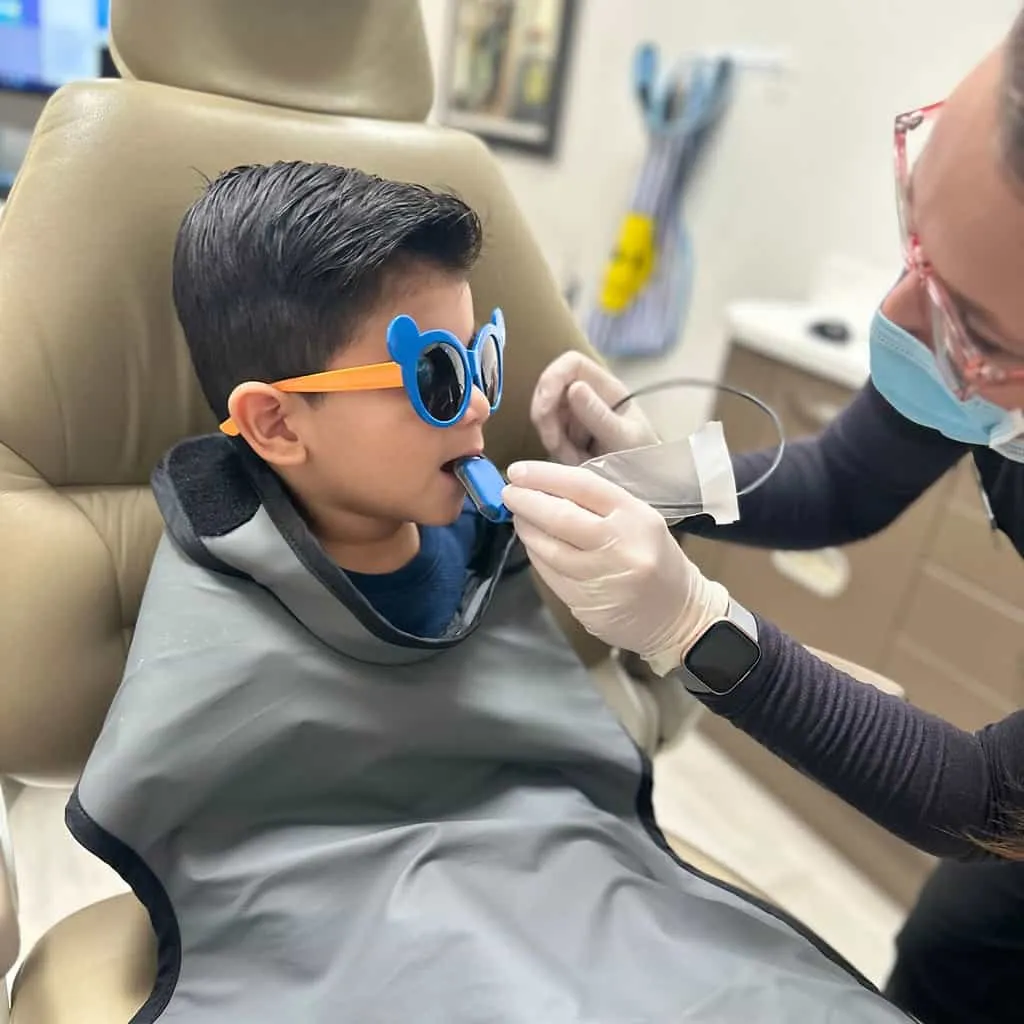
We take X-rays only when necessary and only when the child is ready. -
Education & Encouragement We teach brushing, flossing, and healthy habits in simple, kid-friendly language.
-
Parent Discussion & Next Steps Clear explanations ensure you understand your child’s oral health and future care needs.
Book your child’s next appointment today to stay on top of their oral health!
Age-Appropriate Care for Every Stage
As children grow, their dental needs change. We tailor care at every stage to support healthy development.

Toddlers (Ages 1–3)
We recommend the first visit between ages 1–3. These early appointments build familiarity, monitor development, and help establish lifelong habits.
Kids (Ages 4–10)
As children gain independence, we support healthy routines, monitor changes in baby and permanent teeth, and provide preventive care such as sealants and fluoride.
Tweens & Teens (Ages 11–17)
We guide teens toward strong hygiene habits, monitor growth, address emerging dental concerns, and support a healthy, confident smile.
Preparing Your Child for Their First Dental Visit
A child’s first visit to a dentist is a new experience, and it can feel uncomfortable for some children. With a little advance notice and a few age-appropriate strategies, the first trip can be a positive one. We have helped many children with sensitivities, and we are happy to work with you ahead of time to learn about your child and brainstorm what will make the day a success.
Normalize the process. Everyone goes to the dentist. Treating it as a normal activity helps your child build confidence. Have your child come along and watch when you have your own appointments.
Impart information. Be honest, calm, and reassuring when you talk about the dentist. Explain what to expect, what the office will be like, and how their teeth will feel afterward. There are many age-appropriate books about visiting the dentist; one of our favorites is the pop-up book “Brush Your Teeth, Please.”
Build excitement. Roleplay dentist visits at home and talk about the visit in a positive way. Consider a fun outing afterward to create positive associations.
Manage your emotions. Your own fears of the dentist can transfer to your child. If you feel anxious yourself, do your best to keep it hidden, or ask another adult to help prepare your child for the visit.
What Your Child Can Expect at Their First Visit
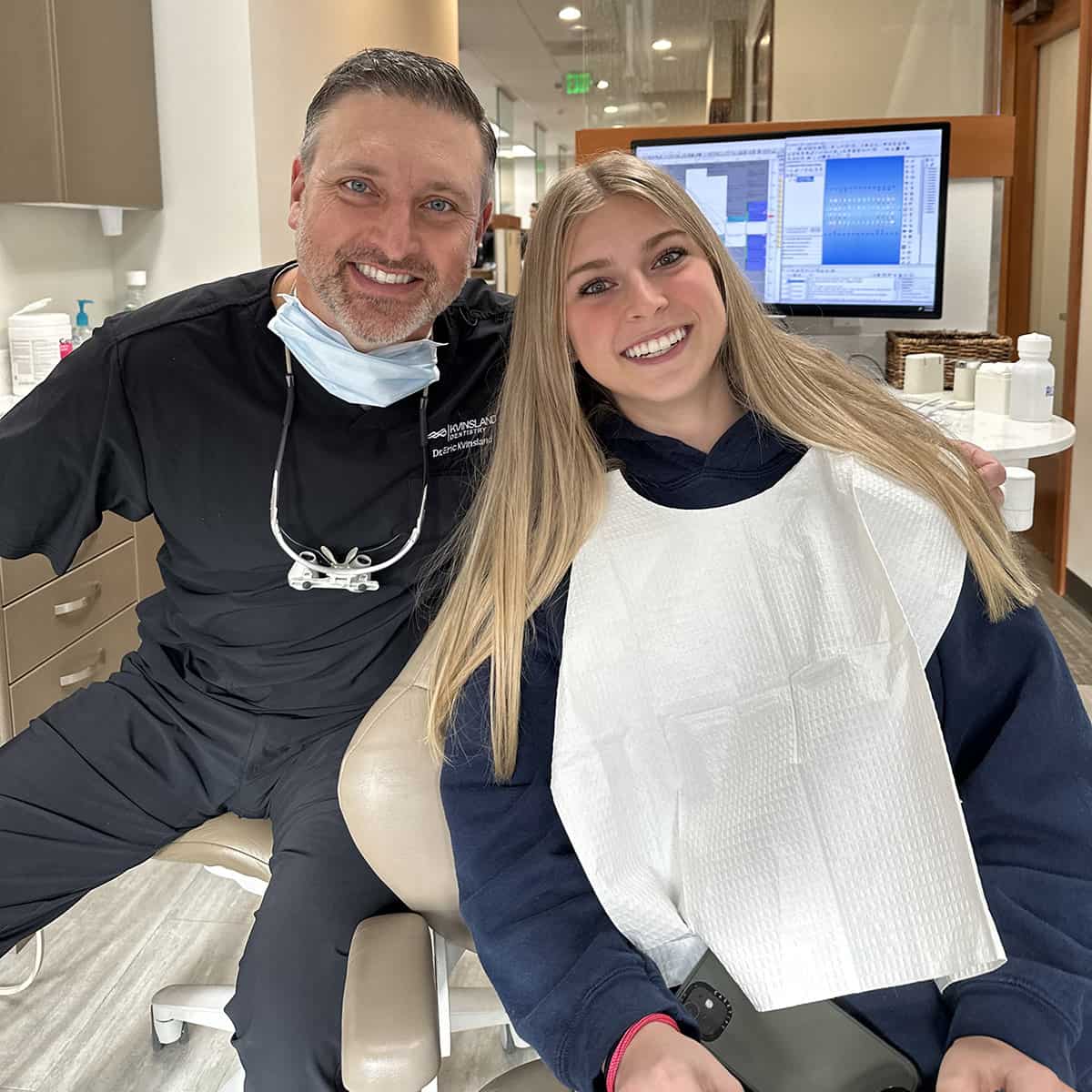
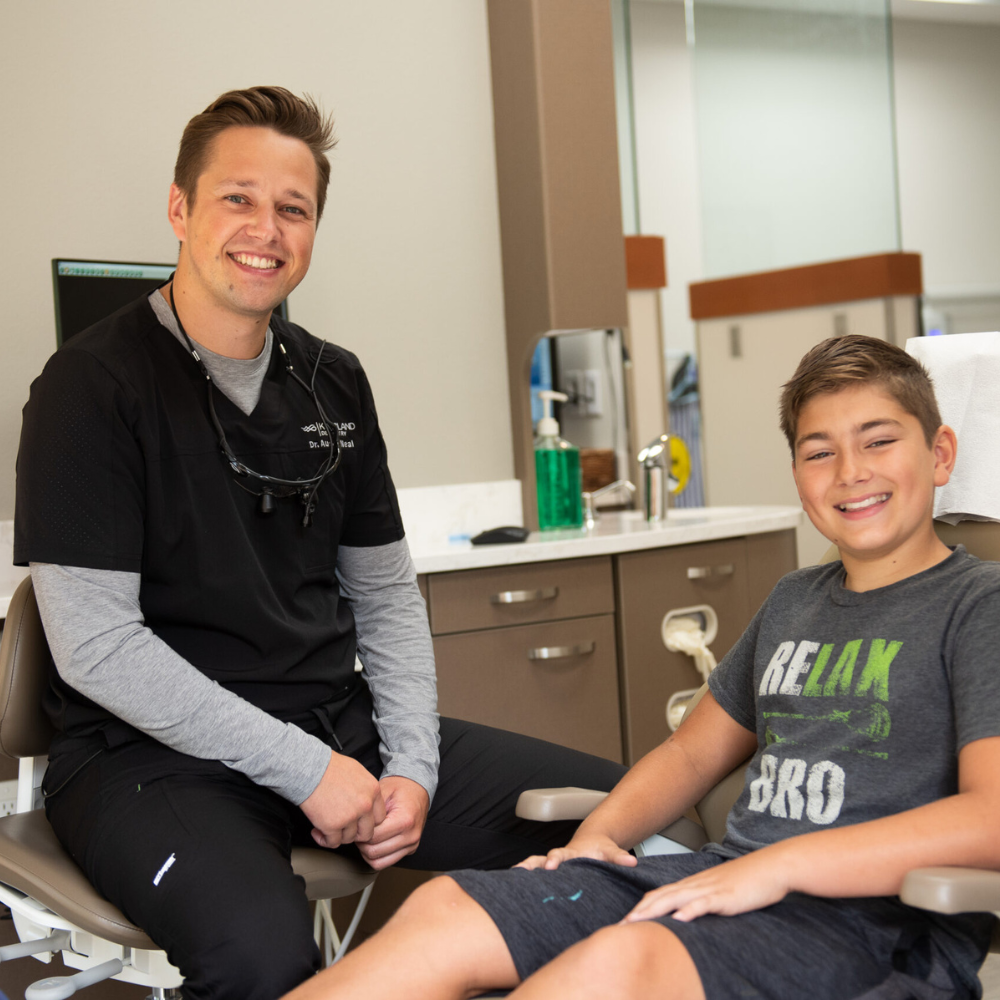
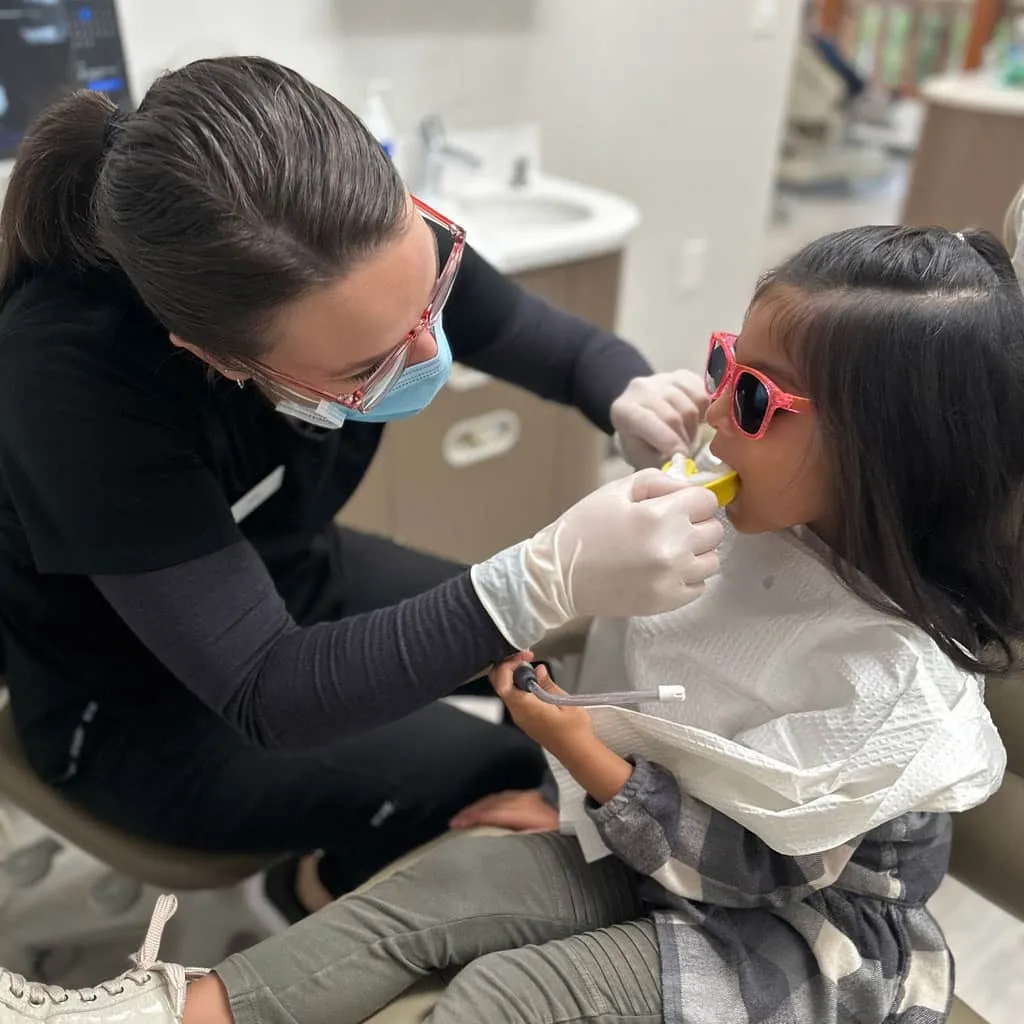
Dr. Kvinsland or Dr. Neal will introduce themselves and get to know your child and their interests, establishing a relationship from day one. They will check your child’s teeth and talk with them about why strong, healthy teeth matter. If your child is comfortable, the dental assistant takes x-rays and lets them see, touch, and ask questions about each tool, so nothing is a mystery. Teeth are cleaned with a gentle, kid-friendly flavor such as bubble gum or strawberry, followed by a fluoride treatment when your child is ready. Every child moves at their own pace, and our team adjusts to meet them where they are. After a fluoride treatment, your child should avoid eating or drinking for 30 minutes.
Loved by Gig Harbor Families
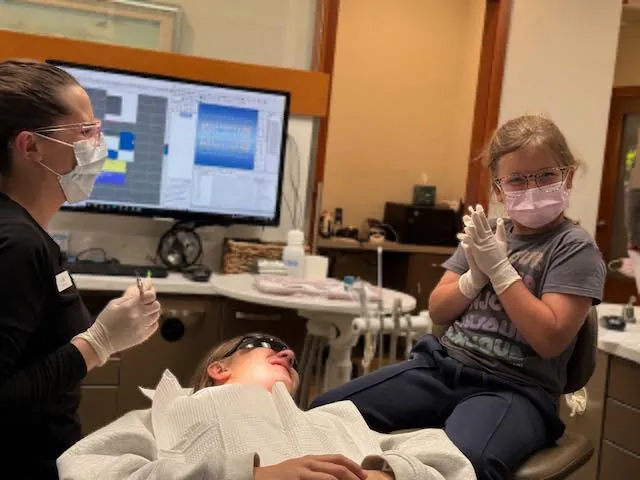
Parents choose Kvinsland Dentistry because visits feel supportive, predictable, and genuinely caring. For many families, the experience becomes something their children look forward to—not something they fear.
“We love Dr Kvinsland and the incredible staff at their office. Thank you for fostering a positive and encouraging environment. The kids are always so happy to come see you and we always feel so taken care of. Thank you for always taking care of our family!” — Amanda L.
Children’s Dentist FAQ
When should I bring my child in for their first dentist visit?
Why Should We Restore or Place Fillings on Baby Teeth?
It is unwise to leave any amount of decay on baby teeth. Decay can easily move to other baby teeth or even to permanent teeth. It can also cause pain and expensive orthodontic problems that could be avoided. We recommend carefully restoring all decayed teeth, both baby and permanent, to optimal health.
Why are dentist appointments every six months for children?
Regular visits help a child get comfortable with their doctor and our staff. These visits are important to consistently evaluate your child’s growth and take early corrective measures if needed. Regular exams and cleanings help prevent decay and avoid costly problems later on. Regular dental visits are part of leading a healthy and normal life for your child and establishing long-term healthy habits.
Why Should My Child Have Fluoride?
Fluoride is a naturally occurring element and has been shown to decrease the chance of getting cavities drastically. Many of our adult patients who grew up with regular dental care and fluoride supplementation have few or no dental problems.
When Should My Child Begin to Brush Their Teeth?
- Brushing should begin before children can do it themselves.
- A wet cloth or gauze effectively cleans gums, removes plaque after nursing, and establishes a good habit early on.
- Gentle brushing with a soft bristle brush should begin when your child gets their first tooth. Flossing should become a daily habit by the time they have most of their primary teeth.
- Children can brush on their own with careful supervision at age six or seven. By eight or nine, they can floss on their own.
- The American Academy of Pediatric Dentistry says, “a good rule of thumb is: When children are accomplished enough in caring for their own needs that they can get up, bathe and dress themselves and comb their hair without your help – then they are ready to accept full responsibility for their mouth-cleaning program!”
My 8-year-old has a large space between his/her two front teeth. Should we be concerned?
Usually there is no need for concern, and the space will close over the next few years as the other front teeth grow into place. We will monitor progress during exams and help you determine if orthodontics may be recommended.
Are dental X-rays safe?
There is very little risk from receiving dental X-rays. Our state-of-the-art technology utilizes a fraction of the radiation used in the past. X-rays are highly valuable for finding hidden decay and tumors, as well as determine growth patterns.
Should I protect my kid's teeth during sports related activities?
Yes! We generally recommend that a soft plastic mouth guard should be used to protect a child’s teeth, lips, and cheeks from injuries.
- If your child plays contact sports, we can create a custom fitted mouth guard.
- For non-contact sports a soft plastic mouth guard purchased from most sporting goods stores are acceptable.
- Be sure to clean the mouth guard after each use by brushing it like you would your teeth, with a toothbrush and toothpaste. Store the mouth guard in a ventilated case.
What should I do if my child knocks out a baby tooth?
If a baby tooth is knocked out, it is best to leave it out or it may damage the permanent tooth below it. Always call us to make sure the whole tooth has come out.
What should I do if my child knocks out a permanent tooth?
The most important thing to do is to remain calm.
If you have the tooth and it appears to be intact:
- You should attempt to insert it back into its socket and then contact us immediately.
- Rinse the tooth gently before inserting it.
- Try not to touch or remove any biologic material from the root surface.
- If you have difficulty re-inserting the tooth, place it in a glass of milk.
- Contact us immediately, after hours contact information will be on our message.
If the tooth is shattered:
- Gather as many of the fragments of the tooth as you can, place it in a glass of milk, and call us immediately.
If the tooth is missing, call us immediately.
If the tooth is chipped or displaced (crooked):
- Try to assess if the child can bite correctly. Always call to be on the safe side.
Kvinsland Dentistry is here to support you. If something happens, give us a call.
How do I know if my child is getting enough fluoride?
Each child’s intake can vary greatly. We recommend discussing this during your child’s exam. If your child’s fluoride intake is insufficient, we may prescribe fluoride supplementation.
What toothpaste is best for my child?
What causes cavities and decay?
Decay is caused by plaque — a thin, sticky, colorless deposit of bacteria that constantly forms on everyone’s teeth. When sugar is eaten, the bacteria in plaque produce acids that attack the tooth enamel. After repeated acid attacks, the enamel breaks down and a cavity or hole is formed in the tooth.
What if an adult tooth is coming in and the baby tooth is still in the mouth?
This is a very common problem, especially in the front lower incisors. If the teeth are loose, they may come out on their own within a few weeks. If the baby teeth are not loose, your dentist may need to extract the baby teeth. In either case, it is best to come in and have our pediatrics specialists make sure the best course of action is taken for your child.
What are dental sealants?
Dental sealants protect the chewing surfaces of molars where most cavities in children are found. A sealant is a tough material that is painted into the tiny grooves and depressions in the molars. By “sealing out” food and plaque, sealants reduce the risk of decay. They are quickly and painlessly applied to any baby teeth and permanent teeth that, in the dentist’s opinion, are likely to get decay on the biting surface. Sealants must be checked periodically and replaced when necessary, though they generally last for several years.