
services / Cosmetic, Prevention, & Restorative Care
Dental Sealants in Gig Harbor, WA
Dental sealants are one of the simplest ways to prevent cavities, and they work for both children and adults. This quick, painless treatment protects the chewing surfaces of the back teeth, where decay most often starts.
What Are Dental Sealants?
A dental sealant is a thin, protective coating that we paint onto the chewing surfaces of the back teeth, the molars and premolars. These teeth have deep grooves and pits that trap food and bacteria and are very hard to clean with a toothbrush alone. The sealant flows into those grooves and hardens into a smooth barrier that keeps decay out. According to the CDC, about 9 in 10 cavities happen in these back teeth, which is exactly where sealants do their work.
How Sealants Prevent Cavities
By sealing off the grooves where bacteria collect, sealants stop cavities before they start. The protection is significant. The CDC reports that sealants prevent about 80 percent of cavities in the back teeth for the first two years, and continue to protect against about 50 percent of cavities for up to four years. For children, that can mean far fewer fillings and a healthier start for their permanent teeth.
The Sealant Procedure, Step by Step
Getting sealants is one of the easiest visits you will have at our office. There is no drilling and no numbing, and each tooth takes only a few minutes.
- We clean and dry the tooth.
- We apply a gentle etching gel that lightly roughens the enamel so the sealant can bond.
- We rinse off the gel and dry the tooth again.
- We paint the liquid sealant into the grooves.
- We harden it with a curing light, and the tooth is protected right away.
Because it is quick and comfortable, sealants are easy to add to a routine cleaning visit.
Dental Sealants for Children and Teens
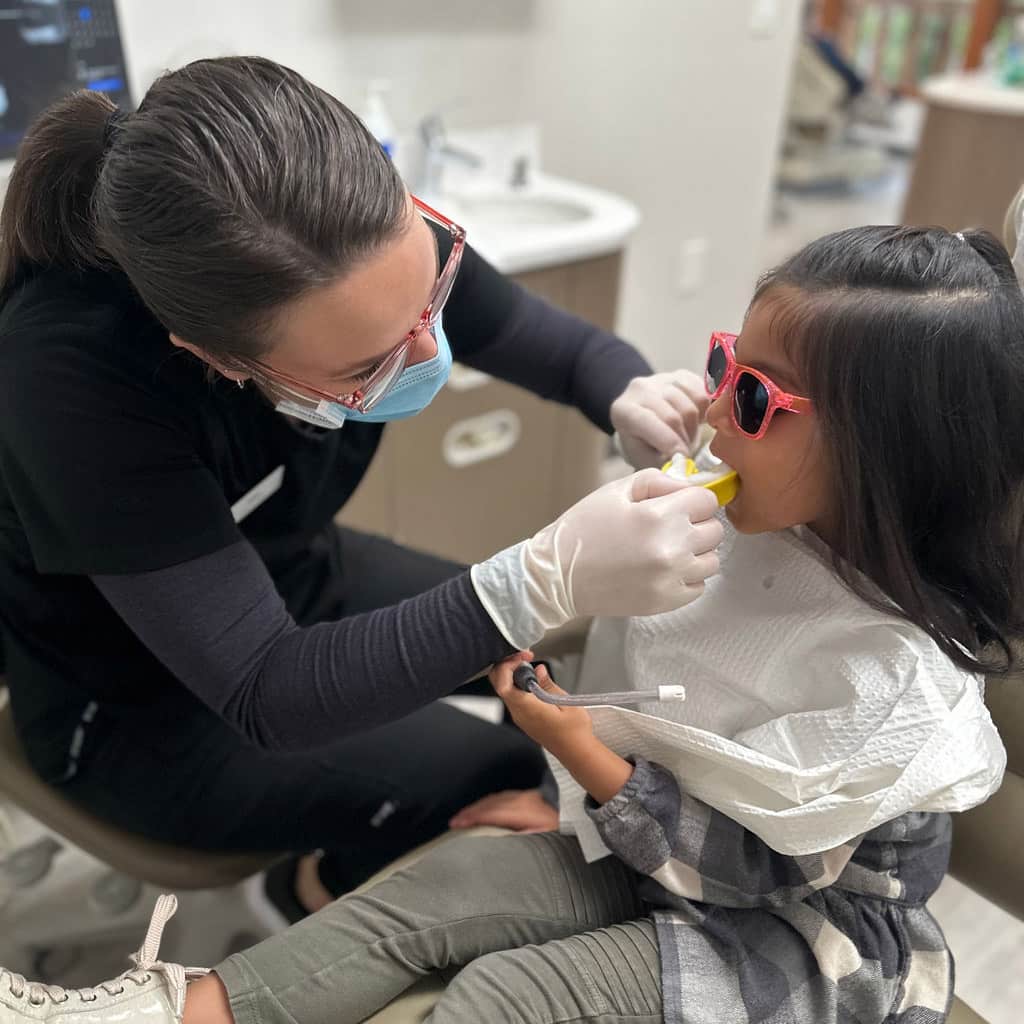
Children and teens get the most benefit from sealants because their newly erupted molars are the most cavity-prone. The best time to seal these teeth is soon after they come in, usually around age 6 for the first molars and around age 12 for the second molars. Sealing them early gives your child years of added protection during the highest-risk years for decay. Our team is gentle and patient with kids, and sealants fit naturally into the preventive care we provide through our children’s dentistry services.

Can Adults Get Dental Sealants?
Yes. Sealants are not just for kids. Any adult whose back teeth are free of decay and fillings can benefit, and they are especially helpful if you are prone to cavities because of deep grooves, dry mouth, a history of decay, or a diet high in sugar. If you have never had sealants and want an extra layer of protection, ask us at your next visit whether they are right for you.
Are Dental Sealants Safe? The BPA Question
Dental sealants have been used safely for decades. Some patients ask about BPA, and it is a fair question. The American Dental Association states that there is no health concern related to BPA exposure from dental sealants. Any trace exposure is extremely small and lasts only a few hours after placement, far less than what you encounter from everyday sources. For the strong cavity protection they provide, sealants are a safe, well-established choice for both children and adults.
How Long Do Sealants Last?
Sealants typically last up to about five years, and often longer with good care. They can chip or wear over time, so we check them at each routine visit and simply reapply if needed. Keeping up with regular cleanings is the best way to make your sealants last.
Cost and Insurance
Sealants are one of the most cost-effective treatments in dentistry, usually around 30 to 60 dollars per tooth. That is a small investment compared with treating a cavity later. Many dental plans cover sealants for children, sometimes in full, and coverage varies by plan. Our team is happy to check your benefits, and we offer flexible financing through Cherry. Learn more on our financial information page.
Sealants vs. Fluoride vs. Fillings
Sealants work best as part of a complete prevention plan, so it helps to know how they compare with other treatments.
Sealants vs. Fluoride
Sealants and fluoride do different jobs, and they work best together. A sealant is a physical barrier that covers the grooves of the back teeth. Fluoride strengthens the enamel across all of your teeth, including the smooth surfaces and the areas between teeth that sealants do not cover. We recommend both for the best protection.
Sealants vs. Fillings
A sealant is preventive and goes on a healthy tooth before any decay forms. A filling is restorative and repairs a tooth that already has a cavity. Because a sealant should never be placed over existing decay, we always clean and check the tooth first. If a tooth already needs a filling, we take care of that before considering sealants.
Caring for Your Sealants
There is no downtime after sealants. You can eat and drink normally as soon as you leave. A few simple habits help your sealants last:
- Go easy on very hard or sticky foods for the first day so the sealant can set.
- Keep brushing twice a day and flossing daily. Sealants protect chewing surfaces, not the spaces between teeth.
- Keep up with regular cleanings so we can check your sealants and reapply if needed.
Why Choose Kvinsland Dentistry for Sealants in Gig Harbor
Families in Gig Harbor have trusted Kvinsland Dentistry for preventive care for decades. Dr. Eric Kvinsland and Dr. Austin Neal take a prevention-first approach, and we are known for being gentle with children and with anyone who feels nervous about the dentist. Whether it is your child’s first set of sealants or added protection for your own teeth, we will make it simple and comfortable.